AC Installation & Replacement for Your Home
Request an estimate for a new AC
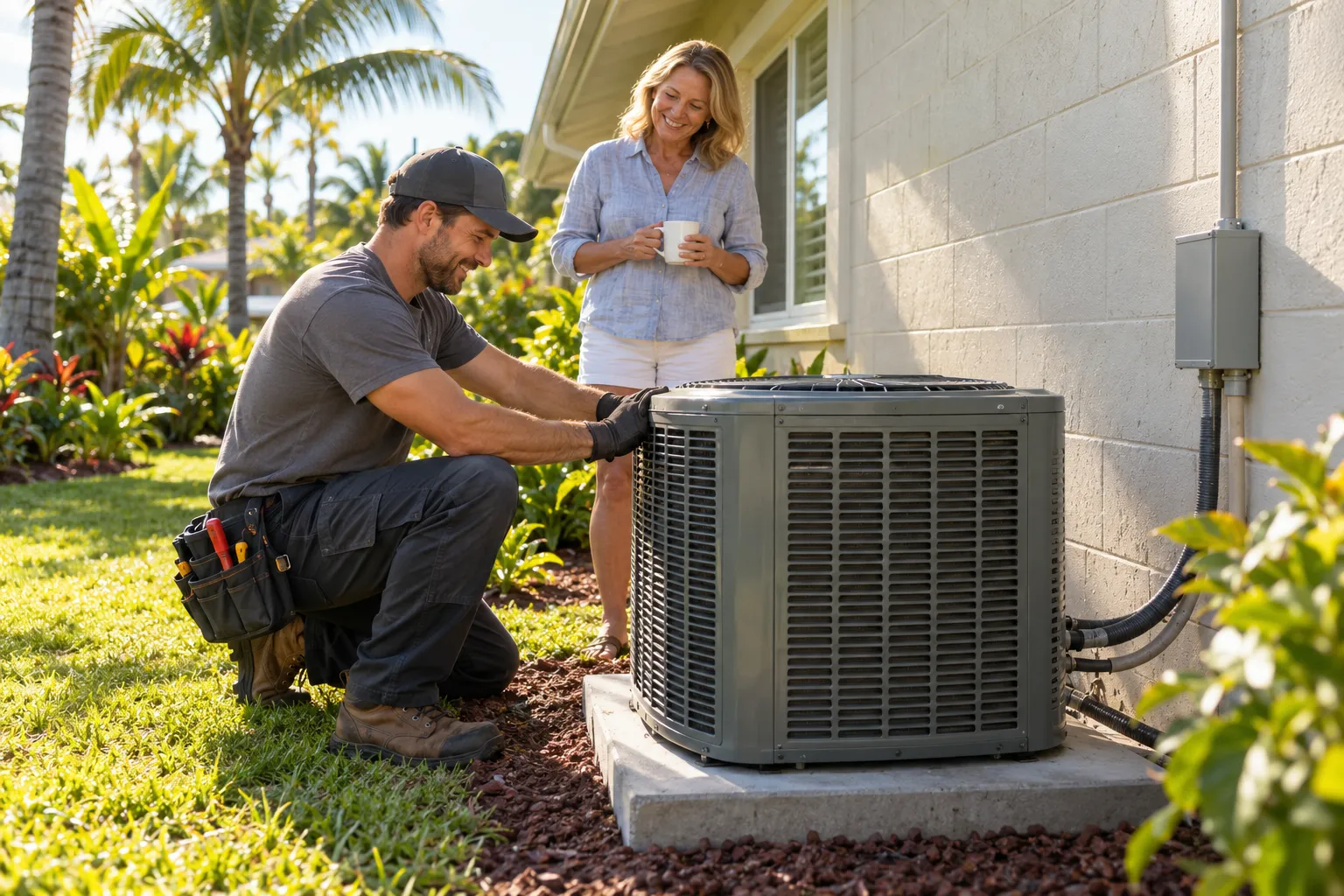
An AC that struggles through humid summers, runs nonstop and still leaves rooms sticky is telling you something. Sometimes a repair fixes it. Other times, the smarter move is a new system. Guardindicate Heating & Air helps you sort out which one you face.
We are a referral service, not an installer. We connect you with independent providers in our network who handle the sizing, the swap and the startup. You request an estimate, compare written quotes, and pick a time that fits your family's schedule. This page walks you through the signs, the system types, the price drivers and the questions worth asking before anyone touches your equipment.
Is your AC past fixing?
Start with a quick check. Is the system more than 12 to 15 years old? Does it need repairs every summer? Are the bills creeping up? Two yeses usually mean it is time to price a replacement.
If it just quit in the middle of a heat wave, read on. You can still plan this well.
Check before you decide
Some problems look big but are small. Do these safe steps first:
- Swap a dirty air filter for a clean one.
- Make sure the thermostat is set to cool and has fresh batteries.
- Look at your breaker panel and reset a tripped breaker once.
- Clear leaves and debris from around the outdoor unit.
Stop there. Do not open panels or touch refrigerant lines. If the unit trips the breaker again, that is a job for a provider.
Signs your AC may need replacing
Watch for a pattern, not one bad day.
- Repairs keep coming back, and each one costs more.
- Rooms feel clammy even when the air is cold.
- The system runs for hours but never catches up.
- You hear grinding, rattling or loud hums.
- The unit uses an older refrigerant that is getting harder to find.
- Some rooms are warm while others are icy.
A good rule: if a repair quote is close to half the price of a new system, ask for both numbers side by side.
Plan around your week
A full swap often takes a day, sometimes a bit longer. That is easier when you plan for it. Pick a day when someone can be home. Move pets and kids' gear away from the air handler closet. Clear a path to the outdoor pad. Ask the provider for a start time window and how long the house will be without cooling.
In peak summer, many providers get booked up. Request your estimate early rather than waiting for a total breakdown.
Types of cooling systems
Most homes in our area use one of these setups:
- Split system: an outdoor condenser plus an indoor coil and air handler. The most common choice for block homes on slabs.
- Heat pump: cools in summer and can heat in mild winters. A good fit where freezes are rare.
- Packaged unit: everything in one outdoor cabinet. Often seen on condos and some roofs.
- Ductless mini-split: wall units with no ducts. Handy for additions, garages or homes with failing ductwork.
Your provider can tell you which one suits your layout and budget.
Why proper sizing matters
Bigger is not better. An oversized unit cools fast, shuts off early and never pulls enough moisture from the air. In a humid climate, that leaves you cold and clammy. A unit that is too small runs all day and wears out early.
A careful provider measures your home, checks insulation, windows and roof type, and does a load calculation. Be wary of anyone who just matches the size of your old unit.
What an installation includes
Expect a provider to cover most of these steps:
- Removing the old equipment and recovering refrigerant the right way.
- Setting a new pad or mounting for the outdoor unit.
- Connecting the indoor coil, air handler, wiring and drain line.
- Checking ductwork for leaks and airflow.
- Starting up the system and testing pressures and temperatures.
- Showing you the thermostat and filter location.
Ask if permits are part of the quote. Many areas require them, especially in hurricane zones.
Matching the system
The outdoor unit, indoor coil and air handler should work as a matched set. Mixing old and new parts can lower performance and cause early failure. Ask whether the quote replaces the full set or just the outdoor unit, and why.
It is also smart to ask about a thermostat upgrade and a drain line safety switch. In a wet climate, a clogged drain can flood a closet.
Efficiency in plain terms
You will see a rating called SEER2. A higher number means the system uses less power to make the same cool air. Higher ratings cost more up front and can save on monthly bills if your AC runs most of the year, which it often does here.
Ask the provider to show the rating, the likely running cost and any available utility or manufacturer rebates. Then decide what pays off for how long you plan to stay.
Questions to ask the provider
- Will you do a load calculation, and can I see it?
- Is the quote for the full matched system?
- Are permits, disposal and startup included?
- What warranty comes with the equipment and with the labor?
- How long will the work take, and what should I prepare?
- Does the provider carry the license and insurance required locally?
Get answers in writing. Quote before work is the rule that saves headaches later.
What's Included
Old unit removal
The provider disconnects your worn-out system, recovers the refrigerant properly and hauls the old equipment away.
Load sizing
Your home is measured so the new system fits its size, shade, windows and humidity.
New equipment setup
Outdoor unit, indoor coil, wiring and drain line are connected and set in place.
Startup and testing
The provider checks airflow, pressures and temperatures, then walks you through the controls.
What a new AC costs
Prices vary by home size, system type, ductwork condition and local permit rules. These are typical U.S. ranges only. Always get a written quote that lists what is and is not included.
| Item | Typical range | Notes |
|---|---|---|
| Central AC replacement (split system) | $5,000 – $12,000 | Depends on tonnage, brand and efficiency level |
| Heat pump replacement | $6,000 – $14,000 | Cools and heats; higher up-front cost |
| Ductless mini-split (single zone) | $2,500 – $6,000 | No ducts needed; more zones add cost |
| Ductwork repair or sealing | $500 – $2,500 | Needed if leaks hurt airflow |
| Smart or upgraded thermostat | $150 – $500 | Includes basic setup |
| Permit and inspection fees | $100 – $500 | Varies by city and county |
How It Works
Send your request
Fill out the short form with your home details, what your AC is doing and your timing.
Get matched locally
We pass your request to an independent provider in our network who serves your area.
Compare written quotes
Review the equipment, labor, permits and warranty listed, then ask any questions.
Schedule the install
Pick a day that works for your household and prep the access areas.
Why Call Guardindicate Heating & Air
Plan the job around you
Providers in our network can share start windows so the work fits your family's week.
Clear pricing
Request an estimate and compare written quotes before anyone starts.
Local know-how
Providers know humid, storm-prone homes and the sizing they need.
No obligation
Asking for an estimate does not lock you into hiring anyone.
Other Services

Need ac installation & replacement in Tarpon Springs?
Tell us what your system is doing and when you are home. We will point you to a local provider in our network. Send a request or reach out by email.
No obligationAC Installation & Replacement FAQ
- How long does an AC replacement take?
- Many full replacements take about one day, though bigger jobs with duct changes can run longer. Ask the provider for a time estimate and what to prepare.
- Should I repair or replace my air conditioner?
- If the unit is over 12 to 15 years old, breaks down often or has a costly repair quote, replacement may make more sense. Ask for both prices in writing and compare.
- Will my homeowners insurance pay for a new AC?
- Usually not for normal wear. Some policies may cover sudden damage, such as from a storm or power surge, so check your policy. Providers can often help document damage for a claim.
Tell us what happened
Tell us what your system is doing and when you are home. We will point you to a local provider in our network. Send a request or reach out by email.
No obligation